Local SEO Mistakes Small Businesses Make: How to Fix Them?
Discover common local SEO mistakes hurting your rankings and learn proven fixes. Expert tips from a local SEO agency in Gurgaon to boost visibility.
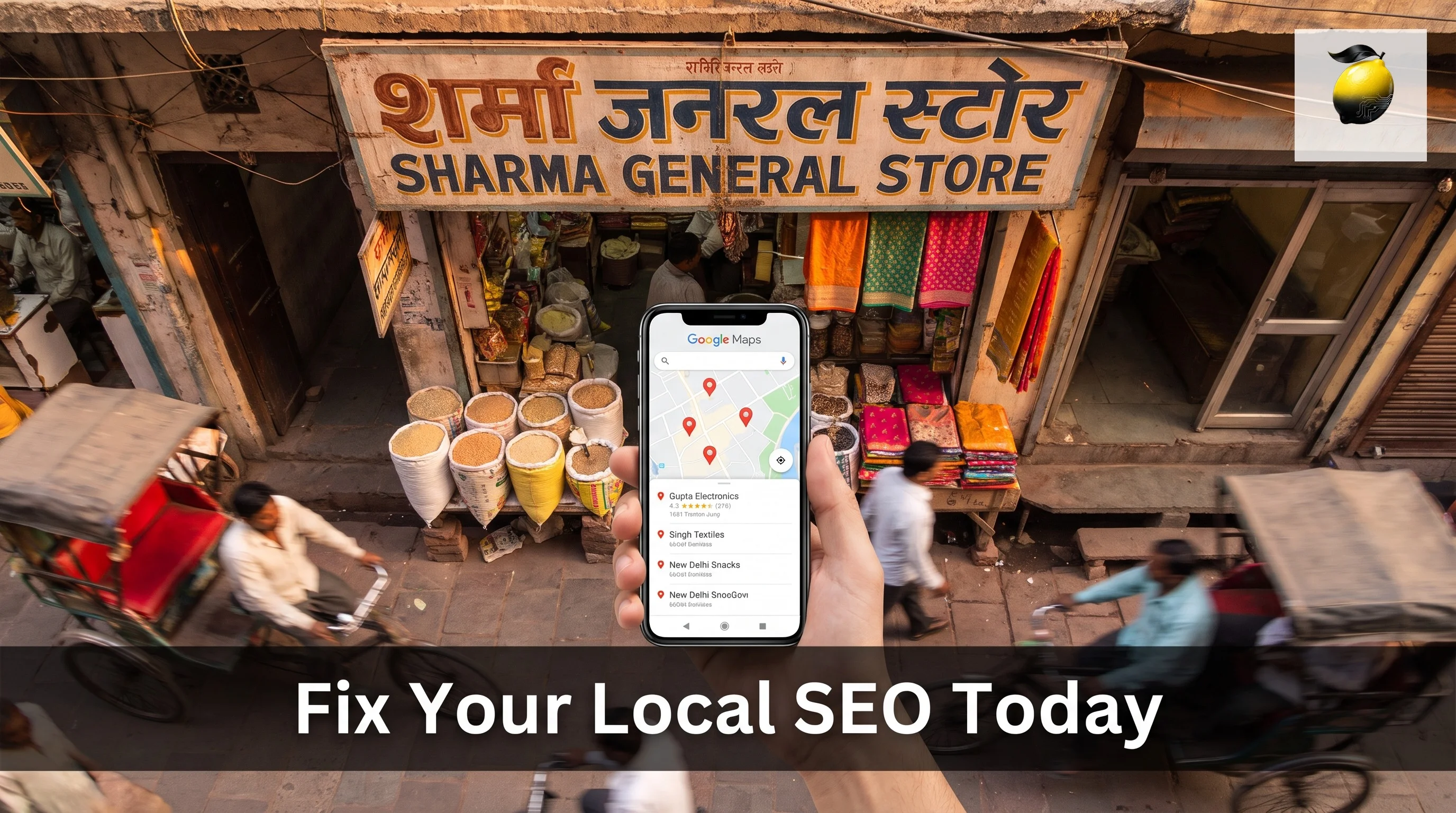
Local SEO Mistakes Small Businesses Make: How to Fix Them?
Small businesses across India are losing thousands of potential customers every month simply because they cannot be found online when people search for their products or services nearby. While investing in digital marketing has become essential, many business owners make critical mistakes that prevent them from appearing in local search results when customers are actively looking for what they offer. A professional local seo service can identify and fix these issues, but understanding these common pitfalls yourself can save your business both time and money. Whether you run a restaurant in Connaught Place, a salon in Koramangala, or a hardware store in Banjara Hills, getting local SEO right means the difference between an empty shop and a thriving business with steady foot traffic.
The stakes are particularly high because local searches have massive commercial intent. When someone searches for "plumber near me" or "best biryani in Indiranagar," they are ready to make a purchase decision within hours, if not minutes. Studies show that 78 percent of mobile local searches result in an offline purchase, and 46 percent of all Google searches have local intent. Despite these compelling numbers, most small business owners either ignore local SEO entirely or implement it incorrectly, allowing competitors who work with a local seo agency in gurgaon or similar professional services to dominate the search results and capture market share.
The landscape of local search has evolved dramatically over the past few years. Google's algorithms now prioritize businesses that demonstrate relevance, proximity, and prominence in local search results. This means having accurate business information across the web, collecting genuine customer reviews, creating location-specific content, and ensuring your website is technically optimized for local queries. Many businesses struggle with these requirements not because they lack resources but because they do not understand what truly impacts local seo ranking in the current digital environment.
This comprehensive guide examines the most damaging local SEO mistakes that small businesses make and provides actionable solutions to fix them. By addressing these issues systematically, you can improve your visibility in local search results, attract more qualified leads, and compete effectively against larger competitors with bigger marketing budgets. The strategies outlined here are based on proven practices that have helped hundreds of Indian businesses achieve first-page rankings for their most valuable local keywords.
Neglecting Google Business Profile Optimization
The single biggest mistake small businesses make is either not claiming their Google Business Profile or claiming it but leaving it incomplete and unoptimized. Your Google Business Profile acts as the cornerstone of your local online presence, appearing prominently in Google Maps and local search results. An incomplete profile with missing business hours, no photos, outdated contact information, or incorrect categories sends a message that your business is unprofessional or possibly even closed.
To fix this critical error, claim your Google Business Profile immediately if you have not already done so. Complete every single section of your profile including business name, address, phone number, website, business hours, categories, and attributes. Choose the most specific primary category that describes your business, as this significantly impacts what searches you appear for. For example, if you run a water purifier service center, select "Water Purifier Supplier" or "Water Treatment Service" rather than the generic "Store" category.
Add high-quality photos of your business exterior, interior, products, services, and team members. Businesses with photos receive 42 percent more requests for directions and 35 percent more click-throughs to their websites compared to those without images. Upload at least 10 to 15 photos initially and continue adding fresh images monthly. Include photos that showcase your work, happy customers, and any unique aspects of your business that differentiate you from competitors.
Regularly update your Google Business Profile with posts about special offers, new products, events, or useful tips related to your industry. These posts appear directly in your business listing and demonstrate that your business is active and engaged with customers. Respond to all reviews, both positive and negative, within 48 hours. Review responses show prospective customers that you value feedback and take customer satisfaction seriously, which can influence their decision to choose your business over competitors.
Inconsistent Business Information Across Online Directories
NAP consistency stands for Name, Address, and Phone number consistency, and it is a fundamental ranking factor for local search. Many small businesses have different versions of their business information scattered across various online directories, social media platforms, and websites. Perhaps the address is written as "Shop No 45, Sector 14" on one platform and "45, Sector-14 Market" on another, or the phone number includes the country code on some listings but not others. These inconsistencies confuse search engines and dilute your potential.
Search engines use citation signals from multiple sources to verify that your business exists and operates at a specific location. When they encounter conflicting information, they lose confidence in which details are correct, often resulting in your business not appearing in local search results at all. This problem becomes exponentially worse if you have moved locations but failed to update old directory listings, resulting in some citations pointing to your previous address.
The solution requires a systematic audit of your online presence. Create a spreadsheet listing all platforms where your business appears, including Google Business Profile, Facebook, Justdial, Sulekha, IndiaMART, industry-specific directories, and any other relevant platforms. Document exactly how your business information appears on each platform. Then standardize your NAP information, choosing one definitive format for your business name, address, and phone number.
Update every listing to match this standardized format exactly. Pay special attention to common inconsistencies like abbreviations versus full words (Pvt. Ltd. vs Private Limited), spacing in phone numbers, apartment or shop number formats, and area names. For businesses operating from home or using virtual offices, ensure the address you list complies with Google's guidelines and matches your actual service area. If managing dozens of citations seems overwhelming, professional services can perform this citation cleanup efficiently using specialized tools that identify and correct discrepancies across hundreds of directories simultaneously.
Ignoring Online Reviews and Reputation Management
Customer reviews have become one of the most influential factors in local search rankings and consumer decision-making. Businesses that ignore reviews or fail to actively encourage satisfied customers to leave feedback are making a critical mistake that costs them both rankings and conversions. Research indicates that 93 percent of consumers say online reviews impact their purchasing decisions, and businesses with higher ratings and more reviews consistently outrank competitors with fewer reviews in local search results.
The problem manifests in several ways. Some businesses have no reviews at all, which makes them appear less established or trustworthy compared to competitors with dozens or hundreds of reviews. Others have stopped collecting reviews after getting their first few, failing to maintain momentum. Some businesses receive negative reviews but never respond to them, leaving unresolved complaints visible to all prospective customers. Each of these scenarios damages both your search visibility and your ability to convert searchers into customers.
Implementing a systematic review generation strategy is essential. Train your staff to ask satisfied customers for reviews at the moment of transaction or service completion when satisfaction is highest. Provide simple instructions or a direct link that makes leaving a review as effortless as possible. Consider sending follow-up emails or SMS messages to customers a few days after purchase with a polite request for feedback and a direct link to your review platforms.
Respond to every review, whether positive or negative. Thank customers for positive reviews and address any concerns mentioned in negative reviews professionally and constructively. When responding to negative reviews, acknowledge the customer's experience, apologize for any shortcomings, explain what happened if appropriate, and describe how you will prevent similar issues in the future. Prospective customers reading these exchanges see a business owner who cares about customer satisfaction and takes responsibility for problems, which actually increases trust rather than decreasing it. Businesses that actively manage their online reputation typically see improvements within months as review volume and average rating increase.
Creating Generic Content Without Local Relevance
Many small businesses create website content that could describe a business anywhere in the world, with no specific connection to the local area they serve. They write about their products and services in generic terms without mentioning their city, neighborhood, or the specific problems local customers face. This represents a massive missed opportunity because search engines give preference to content that demonstrates local relevance and expertise when displaying results for local searches.
For example, a water purifier service might write generally about water purification benefits without discussing the specific water quality issues common in their service area, the TDS levels typical of local municipal water, or how monsoon season affects water quality in their region. A home appliance repair business might describe their services without mentioning the specific residential areas they serve, the typical appliance problems caused by local voltage fluctuations, or their response times to different neighborhoods.
The fix involves creating genuinely useful, location-specific content. Write blog posts addressing local concerns, neighborhood guides, area-specific tips, and content that demonstrates deep knowledge of your local market. If you operate a pest control business in Mumbai, create content about monsoon pest problems, cockroach issues in old Mumbai buildings, or rodent problems common in specific neighborhoods. Include local landmarks, area names, and references that resonate with local readers.
Optimize your website pages with local keywords naturally integrated into the content. Your homepage, service pages, and about page should all mention the specific cities, neighborhoods, or regions you serve. Create separate landing pages for each major service area if you serve multiple locations, with unique content on each page addressing the specific needs of that area. Include your city name in title tags, headers, and throughout your content where it makes contextual sense. Professional content strategy services can help develop a content calendar that systematically covers topics relevant to your local audience while targeting valuable local search terms that drive qualified traffic to your website.
Technical SEO Issues Affecting Local Search Performance
Many small business websites suffer from technical problems that prevent search engines from properly crawling, indexing, and ranking their pages for local searches. These issues often go unnoticed because the website appears to function normally for human visitors, but behind the scenes, technical deficiencies are severely limiting search visibility. Common problems include slow page loading speeds, lack of mobile optimization, missing schema markup, and improper internal linking structure.
Website speed is particularly critical for local searches because many users search on mobile devices while on the go, often with less reliable internet connections. A website that takes more than three seconds to load will lose more than half of its visitors before they even see your content. Google also uses page speed as a ranking factor, meaning slow websites rank lower than faster competitors even when other factors are equal. Many small business websites load slowly because of oversized images, excessive plugins, poor hosting, or inefficient code.
Mobile optimization is non-negotiable for local SEO success since the majority of local searches now occur on mobile devices. If your website is not responsive or provides a poor mobile experience with tiny text, difficult navigation, or elements that do not fit on smaller screens, you are losing both rankings and conversions. Google uses mobile-first indexing, meaning it primarily uses the mobile version of your website for ranking purposes, making mobile optimization essential rather than optional.
Schema markup is structured data code added to your website that helps search engines understand your business information, services, products, reviews, and other content. Local business schema specifically tells search engines your business name, address, phone number, hours, and service areas in a format they can easily process. Most small business websites lack schema markup entirely, missing an opportunity to provide clear signals that improve local search visibility.
To address these technical issues, start by testing your website speed using Google PageSpeed Insights and GTmetrix. Optimize images by compressing them without losing quality, enable browser caching, minify CSS and JavaScript files, and consider upgrading to faster hosting if necessary. Use Google's Mobile-Friendly Test to identify mobile usability issues and work with a developer to implement a responsive design if your site is not already mobile-optimized. Implement local business schema markup on your website, particularly on your homepage and contact page, using Google's Structured Data Markup Helper as a guide. Address broken links, create an XML sitemap, and ensure proper internal linking between related pages on your website. These technical improvements provide the foundation that allows your other local SEO efforts to deliver maximum results.
Failing to Build Local Backlinks and Citations
Link building often gets overlooked by small businesses focusing on local SEO, but earning high-quality backlinks from other local websites significantly boosts your performance. Many business owners do not realize that links from local newspapers, chamber of commerce websites, local blogs, community organizations, and other businesses in their area carry special weight for local search rankings because they signal to search engines that your business is genuinely connected to and relevant within the local community.
The mistake manifests as either complete neglect of link building or pursuing links from irrelevant, low-quality sources that provide no SEO value. Some businesses buy links from link farms or submit to hundreds of low-quality directories, which can actually harm their rankings rather than help. Others focus exclusively on national websites while ignoring the local link opportunities that would provide more immediate local search benefits.
Building a strong local backlink profile requires strategic outreach and genuine community involvement. Start by identifying local link opportunities including local news websites, community blogs, local business associations, chambers of commerce, local event websites, and complementary local businesses. Reach out to these organizations with legitimate reasons for them to link to your website, such as sponsoring a local event, contributing expert quotes for local news stories, offering to write guest posts about topics relevant to their audience, or participating in local charity initiatives.
Create link-worthy content on your website that local organizations would naturally want to reference, such as comprehensive local guides, original research about your industry in your local area, or useful resources for local consumers. For example, a home appliance store could create a detailed guide to choosing the right refrigerator for Indian kitchens considering local climate factors, electricity costs, and available space constraints that local bloggers and forums might reference and link to.
Form partnerships with complementary local businesses where you can cross-promote each other's services on your respective websites. A water purifier service might partner with a plumbing company, each linking to the other from relevant service pages. Get involved in local sponsorships, community events, and charitable activities that earn mentions and links from event websites and local news coverage. Submit your business to high-quality local directories specific to your city or industry, ensuring each submission includes complete, consistent information. Working with professional services that have established relationships with local media and organizations can accelerate this process significantly.
Comparison of Common Local SEO Mistakes and Their Impact
| Mistake | Impact on Rankings | Impact on Conversions | Difficulty to Fix | Time to See Results |
|---|---|---|---|---|
| Incomplete Google Business Profile | Very High | High | Low | 1-2 weeks |
| Inconsistent NAP Citations | High | Medium | Medium | 4-8 weeks |
| No Review Strategy | Very High | Very High | Low | 2-4 weeks |
| Generic Non-Local Content | High | Medium | Medium | 6-12 weeks |
| Technical SEO Issues | High | High | High | 4-8 weeks |
| Lack of Local Backlinks | Medium | Low | High | 12-24 weeks |
Additional Local SEO Mistakes to Avoid
Beyond the major errors already discussed, several other common mistakes can undermine your local SEO efforts. Not optimizing for voice search is increasingly problematic as more consumers use voice assistants to find local businesses. Voice searches tend to be longer and more conversational, so optimizing for question-based phrases like "where can I get water purifier service near me" or "who does appliance repair in Jubilee Hills" becomes important.
Neglecting to track and analyze your local SEO performance means you cannot identify what is working and what needs improvement. Set up Google Analytics and Google Search Console to monitor your website traffic, track which local keywords drive visitors, and identify technical issues Google discovers. Regularly review your Google Business Profile insights to see how customers find your listing and what actions they take.
Local SEO can make or break your small business's online visibility, yet many entrepreneurs unknowingly sabotage their own success with simple mistakes. From incomplete Google Business Profiles to inconsistent contact information across directories, these errors prevent customers from finding you when they search for services in your area. Learn more about the most common local SEO pitfalls and discover how fixing issues like missing location pages, neglected customer reviews, and poor mobile optimization can dramatically increase your foot traffic and online inquiries within weeks.
Related Blogs
- GMB Management for Multi-Location Businesses: Avoiding Duplicate Content and Cannibalization
- How Often Should You Post on Google Business Profile for Best Results?
- How to Combine Local SEO and Google Business Profile for Maximum Results in Gurgaon
- Why Local SEO is important for the Lead generation in Gurgaon?