How to Rank in Local Search Without Spending on Ads
Discover proven local SEO strategies to boost rankings without ads. Expert tips on Google Profile optimization and local visibility for home service businesses.
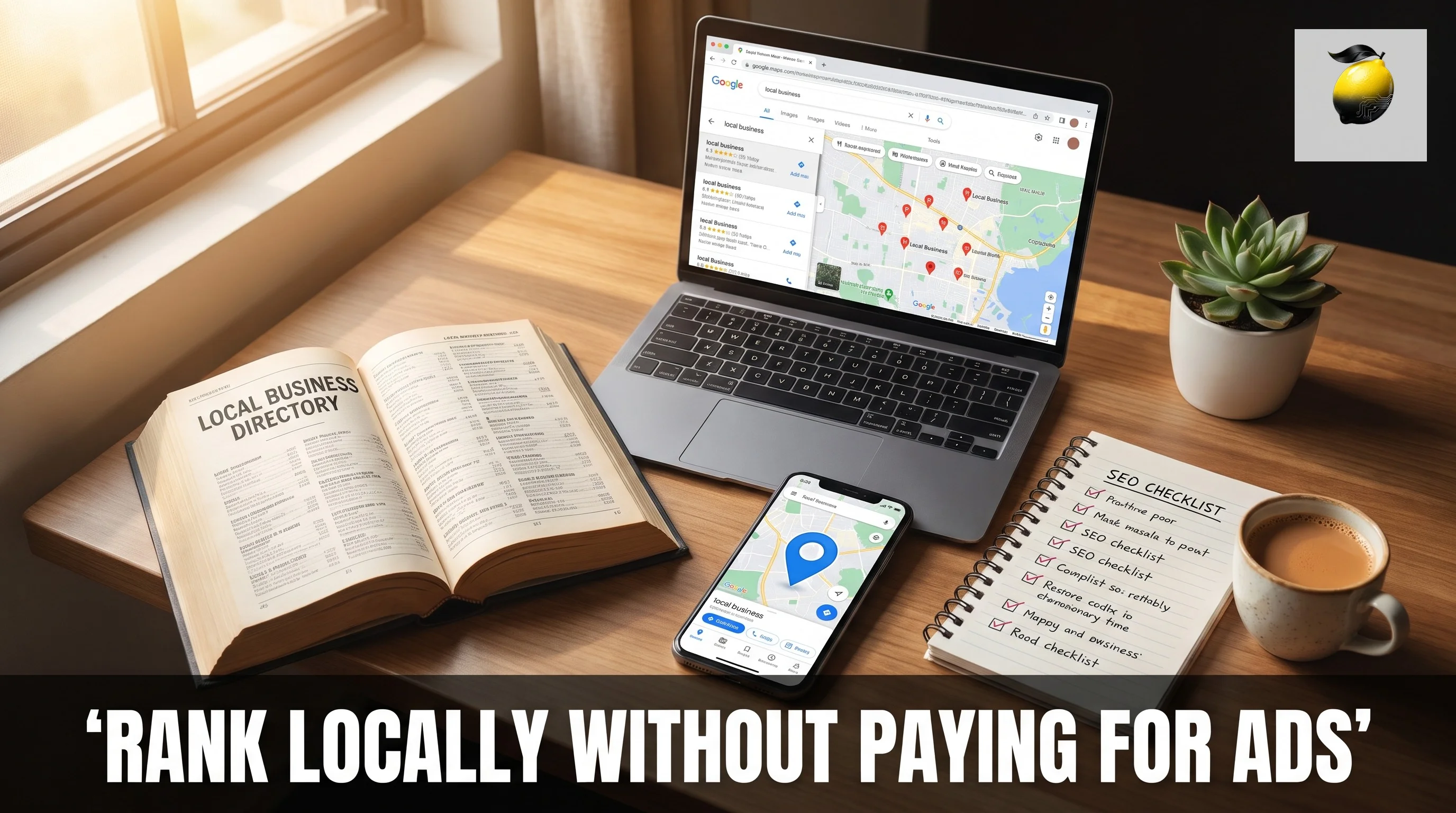
How to Rank in Local Search Without Spending on Ads
Local businesses across India are discovering that organic visibility in search results can deliver more sustainable growth than paid advertising. When potential customers search for services "near me" or in specific localities, appearing in those top organic and map results requires strategic local seo services implementation rather than continuous ad spending. Many home service providers, water purifier dealers, and appliance repair businesses are finding success with google profile management service gurgaon and similar optimization tactics that build long-term visibility without monthly ad budgets.
The reality is that small and medium businesses often struggle with advertising costs that eat into their profit margins. A plumber in Sector 56 or an AC repair service in DLF Phase 3 cannot always compete with large corporations on ad spend. However, with proper local seo services gurgaon strategies, these businesses can outrank even bigger competitors in local search results. The key lies in understanding how search engines evaluate local relevance and authority, then implementing proven tactics that signal your business deserves top placement.
Unlike paid ads that disappear the moment you stop funding them, organic local search rankings build equity over time. Each positive review, every optimized piece of content, and all the local citations you create continue working for your business 24/7. This compound effect means that businesses investing in proper local SEO see their cost per acquisition decrease month after month, while competitors relying solely on ads face constant pressure to maintain spending.
This comprehensive guide reveals exactly how Indian home service businesses can dominate their local search results through strategic optimization, community engagement, and smart digital practices that cost nothing beyond time and effort. Whether you operate in metropolitan areas like Gurgaon, Delhi, Bangalore, or smaller cities across India, these strategies work consistently when applied correctly.
Understanding Local Search Ranking Factors
Search engines use hundreds of signals to determine which businesses appear in local search results and map listings. The three primary pillars are relevance, distance, and prominence. Relevance measures how well your business matches what the searcher wants. Distance calculates how far your business is from the searcher's location or their specified search area. Prominence evaluates how well-known and trusted your business is both online and offline.
Google My Business profile completeness significantly impacts your local rankings. Businesses with complete profiles containing accurate information, regular posts, verified photos, and consistent updates rank higher than competitors with sparse profiles. The algorithm recognizes that detailed profiles provide better user experience, so it rewards them with better visibility. Your business name, address, and phone number must be identical across all online platforms to build this relevance signal.
Reviews quantity, quality, and recency play a critical role in local search positioning. A business with 150 reviews averaging 4.7 stars will typically outrank one with 20 reviews at 5 stars. The algorithm understands that more feedback indicates an established, active business. Additionally, businesses that respond to reviews show engagement, which boosts prominence signals. Review velocity matters too—businesses consistently earning new reviews signal ongoing customer satisfaction and business activity.
On-page SEO elements specific to local search include location-based keywords in title tags, meta descriptions, header tags, and content. However, this must be done naturally. A water purifier service page optimized for "RO repair services in Vasant Kunj" performs better than generic "water purifier repair" pages when someone searches in that area. Local content that addresses neighborhood-specific problems, mentions local landmarks, and discusses community issues builds stronger local relevance signals than generic content.
Optimizing Your Google Business Profile Without Spending Money
Your Google Business Profile serves as your digital storefront in local search results. Setting it up completely takes just a few hours but delivers ongoing benefits. Start by claiming your business listing through Google Business Profile Manager. Verify your location through postcard verification, phone, or email depending on your business type. This verification step is crucial—unverified listings barely rank and cannot be fully managed.
Complete every single section of your profile with detailed, accurate information. Choose the most specific primary category that describes your business—"Water Purifier Repair Service" ranks better than the generic "Home Services" category. Add all relevant secondary categories that apply to your services. Include your service area by specifying the cities or neighborhoods you serve. For businesses without a physical storefront customers visit, hide your address but still define service areas.
Upload high-quality photos that showcase your work, team, and location. Businesses with photos receive 42 percent more requests for directions and 35 percent more click-throughs to their websites than those without images. Take photos of your team at work, completed installations, happy customers with permission, your service vehicles, and before-and-after shots. Add new photos monthly to keep your profile fresh and signal active business operations.
Post regular updates through Google Posts about offers, events, new services, and helpful tips. While these posts disappear after seven days from prominent display, they remain visible in your posts archive and contribute to your profile's overall activity score. Posting weekly keeps your profile active and gives potential customers more reasons to choose you. Share seasonal maintenance tips, explain new services, announce expanded service areas, or highlight customer success stories.
Building Local Citations and Directory Presence
Local citations are online mentions of your business name, address, and phone number on other websites. These citations build trust signals that improve your local search rankings. Start with major Indian business directories like Justdial, Sulekha, IndiaMART, and IndiaBizForSale. Create complete profiles on each platform with consistent information matching your Google Business Profile exactly. Even small inconsistencies confuse search algorithms and dilute your ranking power.
Industry-specific directories provide more valuable citations than general directories. If you operate a home appliance repair business, listings on websites related to home services, appliance dealers, and local service provider directories carry more weight. Research where your competitors are listed and ensure your business appears on those same platforms. Many of these directories offer free basic listings that provide sufficient citation value without paid upgrades.
Local news websites, chamber of commerce listings, and community organization websites offer high-authority citations. Getting mentioned in a local news article about business growth in your area or being listed as a chamber member creates powerful local relevance signals. Participate in community events and reach out to local bloggers who cover business and community topics in your area.
Maintain consistent NAP information across all platforms. Use a spreadsheet to track where your business is listed and regularly audit these listings for accuracy. When you change phone numbers or expand service areas, update all citations simultaneously. Tools like Google Search can help you find existing citations by searching for your business name in quotes along with your city name.
Creating Location-Specific Content That Ranks
Content marketing for local SEO differs from general content strategies by focusing on geographic relevance. Write blog posts addressing specific problems customers face in your service areas. A water purifier service could create posts like "Water Quality Issues in Gurgaon: Why RO Maintenance Matters" or "Top 5 Water Purifier Problems Delhi Residents Face During Summer." These location-specific posts attract local search traffic and establish local expertise.
Create separate service pages for each major area you serve. If you provide appliance repair across multiple neighborhoods or cities, build dedicated pages for each location. These pages should discuss the specific services available in that area, mention local landmarks that help customers understand your service coverage, and include testimonials from customers in those neighborhoods. Avoid duplicate content by making each page unique with location-specific details.
Answer common questions your local customers ask through detailed blog content. When customers call asking about RO rejection rates in high TDS areas, write an article explaining the science and solution. When people search "best time to service AC in Noida," create comprehensive content answering that question. This question-based content captures long-tail local searches and positions you as the local expert.
Include location keywords naturally throughout your content without overstuffing. The primary keyword should appear in your H1 title, at least one H2 subheading, the first paragraph, and naturally throughout the body. Supporting keywords can be integrated where relevant to provide context. The goal is natural readability that serves human readers while signaling relevance to search engines.
Leveraging Reviews and Reputation Management
Reviews function as social proof and ranking signals simultaneously. Businesses with more positive reviews rank higher in local search results and convert more visitors into customers. Develop a systematic review generation process rather than randomly asking for feedback. The best time to request reviews is immediately after successful service completion when customer satisfaction peaks.
Send review requests through SMS or email with direct links to your Google Business Profile review page. Make the process as simple as possible—customers are far more likely to leave reviews when it takes just two clicks. Personalize your requests mentioning the specific service provided: "Thank you for choosing us for your water purifier installation. We'd love to hear about your experience." Personal touches increase response rates significantly.
Respond to every review, both positive and negative. Thank customers for positive reviews with personalized responses that mention specific details they shared. For negative reviews, respond professionally acknowledging concerns, offering solutions, and inviting offline conversation to resolve issues. Search algorithms reward businesses that engage with reviews, and potential customers read your responses to gauge how you handle problems.
Never buy fake reviews or incentivize reviews with discounts for positive feedback. Both practices violate platform policies and can result in profile suspension or permanent bans. Search engines have sophisticated detection systems that identify fake review patterns. Instead, focus on delivering excellent service that naturally generates authentic positive reviews. Quality always beats quantity in the long run.
Building Local Backlinks Through Community Engagement
Backlinks from other local websites boost your local search authority significantly. Local newspapers, community blogs, business associations, and regional directories provide valuable local backlinks. Start by identifying local websites in your city that might link to your business. Look for community news sites, neighborhood blogs, local business roundup articles, and city-specific resource pages.
Sponsor local events, sports teams, or community initiatives to earn backlinks from their websites. A modest sponsorship of a neighborhood cricket tournament or school function often results in your business name and website link appearing on event pages and local news coverage. These contextual backlinks from relevant local sources carry substantial ranking power.
Write guest posts for local business blogs or community websites. Share your expertise on topics relevant to your industry while providing genuine value to readers. A home appliance repair expert could write about energy efficiency tips for local publications. Include a natural link back to your website in your author bio. Avoid overly promotional content—focus on being helpful rather than selling.
Partner with complementary local businesses for cross-promotion opportunities. An AC repair service might partner with electrical contractors, and both businesses can link to each other's websites on their partner or resource pages. These local, relevant backlinks signal to search engines that your business is an established part of the local business community.
Tracking Results and Continuous Improvement
Measuring your local SEO performance helps you understand what works and where to focus future efforts. Google Business Profile Insights provides free data about how customers find your listing, what actions they take, and how your visibility changes over time. Track metrics like search impressions, map views, website clicks, direction requests, and phone calls monthly to identify trends.
Google Search Console shows which search terms bring visitors to your website and how your pages perform in search results. Filter data by location to see how you rank in different geographic areas. Monitor your position for target keywords and related terms. Notice which content pages attract the most local traffic and create more content on similar topics.
Set up location-specific goals in Google Analytics to track conversions from local search traffic. Measure not just website visits but actual business outcomes—contact form submissions, phone calls, and direction requests. Calculate your cost per acquisition from organic local search by dividing your monthly time investment (valued at your hourly rate) by new customers gained through local search.
Conduct quarterly competitive analysis to see how your rankings compare to competitors. Search for your primary service keywords from different locations within your service area. Note which businesses consistently appear in the top three map results and study their profiles, content, and review strategies. Identify gaps in your approach and areas where you can differentiate.
Common Local SEO Mistakes to Avoid
Many businesses sabotage their local search performance through easily avoidable mistakes. Using a PO Box instead of a physical address weakens your local presence because search engines prefer businesses with real locations. If you operate from home, consider using your home address with the option to hide it from public display while still confirming it to search engines.
Choosing incorrect or overly broad business categories dilutes your relevance signals. Select the most specific category that matches your primary service. A business offering multiple services should choose the category representing their main revenue source as primary and add others as secondary categories.
Neglecting mobile optimization severely impacts local search performance since most local searches happen on mobile devices. Ensure your website loads quickly on mobile, displays properly on small screens, and includes click-to-call phone numbers. Mobile-friendly websites rank higher in mobile search results where most local queries occur.
Inconsistent business information across platforms confuses search algorithms and customers alike. Your business name should be identical everywhere—if you're "ABC Water Purifiers" on Google, don't be "ABC Water Purifiers Pvt Ltd" on Justdial and "ABC RO Services" on your website. Standardize your NAP information across all online presence points.
Conclusion
Ranking in local search without advertising spend is absolutely achievable for businesses willing to invest time and effort into strategic optimization. The combination of a fully optimized Google Business Profile, consistent local citations, location-specific content, proactive review generation, and community backlinks creates a powerful foundation for local visibility. Unlike paid advertising that requires continuous funding, these approaches build compound value over time, making each month more effective than the last.
Indian home service businesses have tremendous opportunities in local search because most markets remain under-optimized. Your competitors likely have incomplete profiles, few reviews, and minimal local content—making it relatively easy to outrank them with consistent effort. Start with the highest-impact activities: optimize your Google Business Profile completely, generate reviews systematically, and create location-specific content that addresses real customer needs in your service areas.
Remember that local SEO is a marathon, not a sprint. Results typically become noticeable within two to three months and strengthen continuously over the following year. Businesses committed to these strategies for 12 months consistently achieve top-three rankings in their primary service areas. The investment of a few hours weekly eliminates dependence on expensive advertising while building a sustainable competitive advantage that grows stronger with time.
Local search dominance doesn't require advertising budgets—it demands strategic optimization. Discover how businesses secure top positions in "near me" searches and Google Maps through verified listings, location-specific content, customer reviews, and local citations. Learn more about proven local SEO techniques that deliver sustained visibility, connect you with nearby customers actively searching for your services, and build long-term organic presence without ongoing ad costs.