How NAP Consistency Impacts Google Maps Rankings and How to Audit It
Learn how NAP consistency impacts Google Maps rankings for local businesses. Complete audit guide for local citations and GMB optimization strategies.
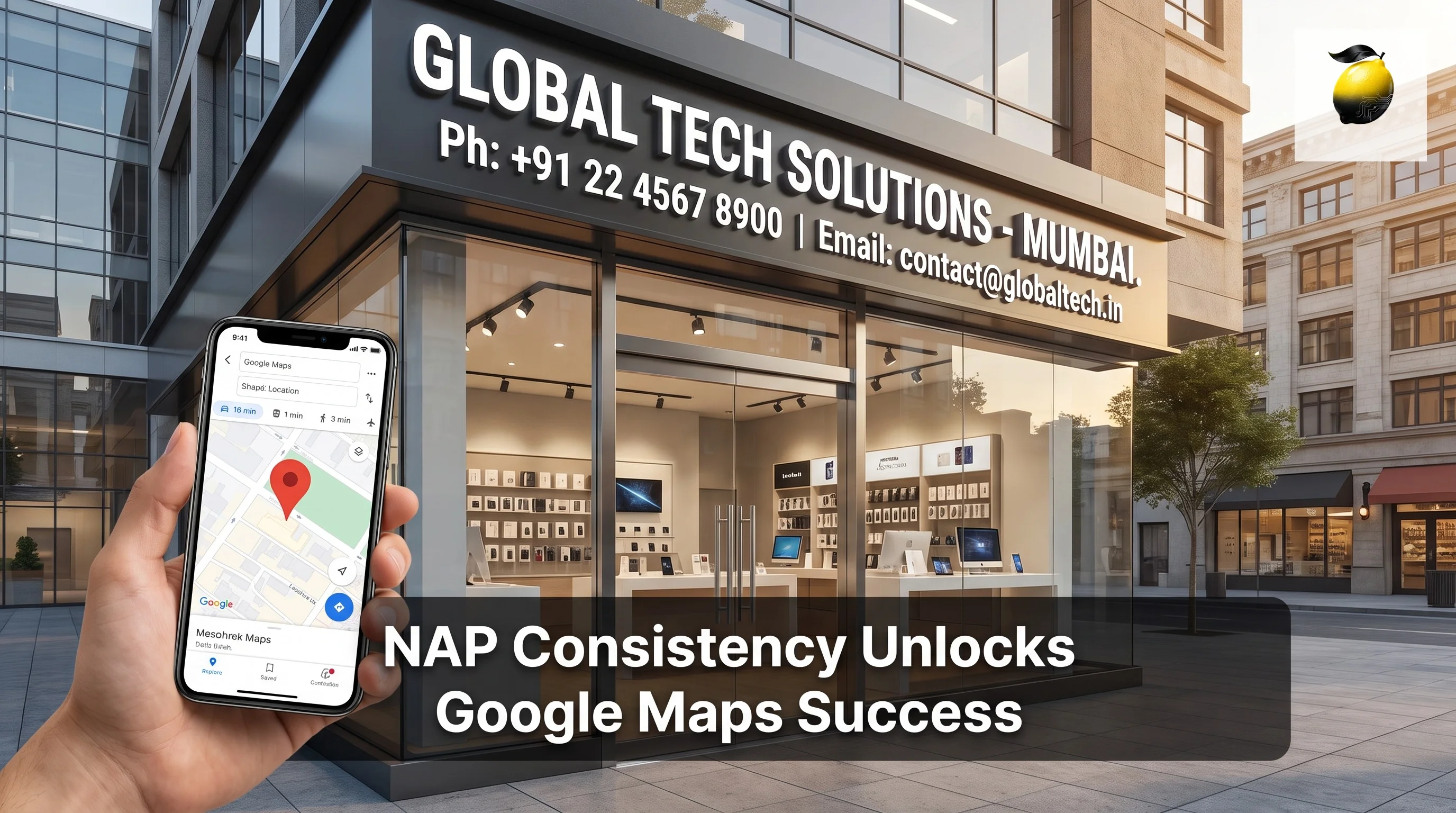
How NAP Consistency Impacts Google Maps Rankings and How to Audit It
When you search for a service near your location on Google Maps, have you wondered why some businesses appear at the top while others remain buried under pages of results? The answer often lies in something seemingly simple yet incredibly powerful: NAP consistency. NAP stands for Name, Address, and Phone Number, and maintaining uniform information across all online platforms directly influences how Google ranks local businesses. For companies investing in local seo in gurgaon, understanding this concept is not optional—it is fundamental to digital visibility. Inconsistent business information confuses search engines, dilutes your local search authority, and ultimately costs you customers who cannot find accurate details about your services. Whether you run a water purifier installation service, home appliance repair business, or any local establishment, mastering NAP consistency can transform your Google Maps presence and drive more foot traffic to your doorstep.
Understanding NAP Consistency and Its Critical Role
NAP consistency refers to maintaining identical business information across every online platform where your company appears. This includes your website, Google Business Profile, social media accounts, business directories, review sites, and industry-specific listings. When search engines crawl the web, they validate your business legitimacy by cross-referencing information from multiple sources. Consistent NAP signals tell Google that your business is trustworthy, established, and worthy of higher rankings. Conversely, variations in how you list your business name, different phone numbers across platforms, or outdated addresses create confusion. Google's algorithm interprets these discrepancies as potential duplicate businesses or unreliable information, leading to decreased visibility in local search results.
The impact on Google Maps rankings is substantial. Research indicates that citation signals account for approximately 13 percent of local pack ranking factors. For businesses focusing on GMB management in gurgaon, this statistic underscores why citation accuracy cannot be overlooked. When your NAP information matches perfectly across hundreds of online citations, Google gains confidence in displaying your business prominently. This confidence translates directly into better map pack positions, increased website traffic, and more customer inquiries. The connection between NAP consistency and local search performance represents one of the most controllable ranking factors within your optimization strategy.
Common NAP Inconsistency Issues That Hurt Rankings
Businesses often unknowingly create NAP variations that damage their local search performance. One frequent mistake involves using different business name formats across platforms. For example, listing your company as "Sharma Water Solutions" on your website, "Sharma Water Solutions Pvt Ltd" on some directories, and "Sharma Water Solutions Private Limited" elsewhere creates three distinct NAP variations. Even small differences like including or excluding periods in abbreviations matter. Writing "Pvt. Ltd." versus "Pvt Ltd" creates inconsistency in Google's eyes.
Address inconsistencies present another common challenge. Indian addresses can be complex, with sector numbers, phase designations, and informal landmark-based descriptions. Using "Sector 14, Gurgaon" on one platform and "Sector-14, Gurugram, Haryana" on another, or abbreviating "Road" as "Rd" inconsistently, generates variations that weaken your citation profile. Phone number formatting also causes problems. Listing your contact as "+91-9876543210" on some sites, "9876543210" on others, and "098765-43210" elsewhere creates three different versions of the same number. While humans understand these represent identical information, search engine algorithms see distinct data points.
Suite numbers, building names, and floor details add complexity. Some businesses include these elements in citations while omitting them from others. Merged or changed business names from rebranding efforts often leave outdated information scattered across older directories. Closed locations that still appear in citations, multiple phone numbers used inconsistently, and PO boxes mixed with physical addresses all contribute to NAP chaos that undermines local citations in Gurgaon efforts.
How to Conduct a Comprehensive NAP Audit
Performing a thorough NAP audit requires systematic research and documentation. Begin by establishing your canonical NAP—the single, official version of your business information that will serve as the standard for all platforms. Write down exactly how your business name should appear, the precise address format including punctuation, and the preferred phone number format. This canonical version becomes your reference point for all future citations.
Next, create a spreadsheet to track all existing citations. Start with obvious platforms like your Google Business Profile, Facebook, Instagram, and your own website. Then expand to major Indian business directories including Justdial, Sulekha, IndiaMART, and industry-specific platforms. Use Google search operators to find additional citations by searching your business name in quotes along with your city name. Search for your phone number in quotes to discover all listings containing that information. This reverse search often reveals forgotten or unknown citations on unexpected platforms.
For each citation found, document the exact NAP information as it currently appears. Note any variations, no matter how minor. Record the platform name, URL, and date of audit. This documentation creates a clear picture of your consistency status. Online tools can accelerate this process. Services like Moz Local, BrightLocal, and Whitespark offer citation tracking specifically designed for local businesses. While some charge fees, they can scan hundreds of platforms quickly, identifying inconsistencies that manual searches might miss.
Pay special attention to these high-impact platforms during your audit:
- Google Business Profile (most critical)
- Apple Maps
- Bing Places
- Facebook Business Page
- Major review sites like Google Reviews, TripAdvisor, Zomato (if applicable)
- Industry-specific directories
- Local chamber of commerce listings
- Government business registries
- Press release distribution sites
- Local news website mentions
Fixing NAP Inconsistencies and Maintaining Accuracy
Once you have identified all inconsistencies, prioritize corrections based on platform authority. Focus first on your Google Business Profile, as this directly impacts Maps rankings. Log into your GMB dashboard and ensure every field contains accurate, canonical information. Verify that your primary category accurately reflects your business type and that service areas are correctly specified.
Move next to high-authority national directories and social media platforms. Most platforms allow business owners to claim listings and make direct edits. For sites where you have account access, update information immediately to match your canonical NAP. Document each correction in your tracking spreadsheet with the date changed. For platforms where you lack direct access, submit change requests through their verification processes. Some directories require proof of business ownership before accepting changes.
Third-party data aggregators like Data Axle, Neustar Localeze, and Foursquare distribute business information to hundreds of downstream directories. Correcting your information with these aggregators creates a ripple effect, updating numerous citations simultaneously. While this approach requires investment, it efficiently addresses widespread inconsistencies. For businesses serious about local SEO in Gurgaon, working with data aggregators saves significant time compared to individual directory corrections.
Remove duplicate listings wherever possible. Duplicates dilute citation authority and confuse customers. Most platforms provide processes for reporting and merging duplicate business profiles. When duplicates cannot be removed, at least ensure they contain identical NAP information to minimize negative impact. Monitor quarterly to catch new inconsistencies early. Set calendar reminders to review major citations every three months, especially after business changes like phone number updates or address modifications.
Create a citation management protocol for your team. Establish clear guidelines about who can create business listings and require all new citations to reference the canonical NAP document. This prevents well-intentioned employees from accidentally creating new variations when registering on new platforms. Train staff handling customer inquiries to provide consistent business information in email signatures, social media responses, and verbal communications.
Measuring NAP Consistency Impact on Rankings
Track specific metrics to evaluate how NAP consistency improvements affect your local search performance. Monitor your Google Maps ranking for target keywords weekly using rank tracking tools or manual searches from different devices and locations. Document your position in the local 3-pack for terms relevant to your business. Record monthly organic traffic from local searches through Google Analytics, segmenting visitors who arrived through Maps versus traditional search results.
Measure citation score improvements using local SEO tools that calculate what percentage of major directories contain accurate NAP information. Track the growth of accurate citations over time as you implement corrections. Monitor Google Business Profile insights for views, searches, and actions taken. Improved NAP consistency typically correlates with increased profile impressions and customer actions like calls, direction requests, and website visits.
Pay attention to ranking fluctuations after major citation updates. While NAP consistency is just one ranking factor among many, correcting widespread inconsistencies often produces noticeable improvements within 4-8 weeks as search engines recrawl updated listings. Combined with other GMB management in Gurgaon strategies like review generation, post publishing, and category optimization, NAP consistency creates a solid foundation for sustained local search success.
Conclusion
NAP consistency represents a foundational element of local search optimization that directly impacts your Google Maps rankings and overall online visibility. By maintaining identical business information across all platforms, you build trust with search engines, improve your local pack positions, and make it easier for customers to find and contact your business. The audit process requires initial effort but creates long-term benefits through improved rankings and customer acquisition. Start by establishing your canonical NAP, systematically identifying existing citations, correcting inconsistencies on high-authority platforms, and implementing ongoing monitoring procedures. Combined with comprehensive local SEO strategies, NAP consistency provides a competitive advantage in local markets, ensuring your business appears prominently when nearby customers search for your services on Google Maps.
NAP consistency is the backbone of local search visibility—your business name, address, and phone number must match exactly across every online directory, social platform, and citation source. Google's algorithm cross-references these details to verify your business legitimacy and location accuracy. Even minor inconsistencies like "St." versus "Street" or different phone number formats can confuse search engines, diluting your ranking signals and pushing competitors ahead. Learn more about conducting a thorough NAP audit to identify discrepancies across hundreds of citations, clean up outdated listings, and establish the uniform presence that Google rewards with higher Maps rankings and increased customer discovery.