How Google Decides Local Rankings: Relevance, Distance and Prominence Explained
Learn how Google ranks local businesses using relevance, distance, and prominence. Master local SEO services and Google Business Profile optimization.
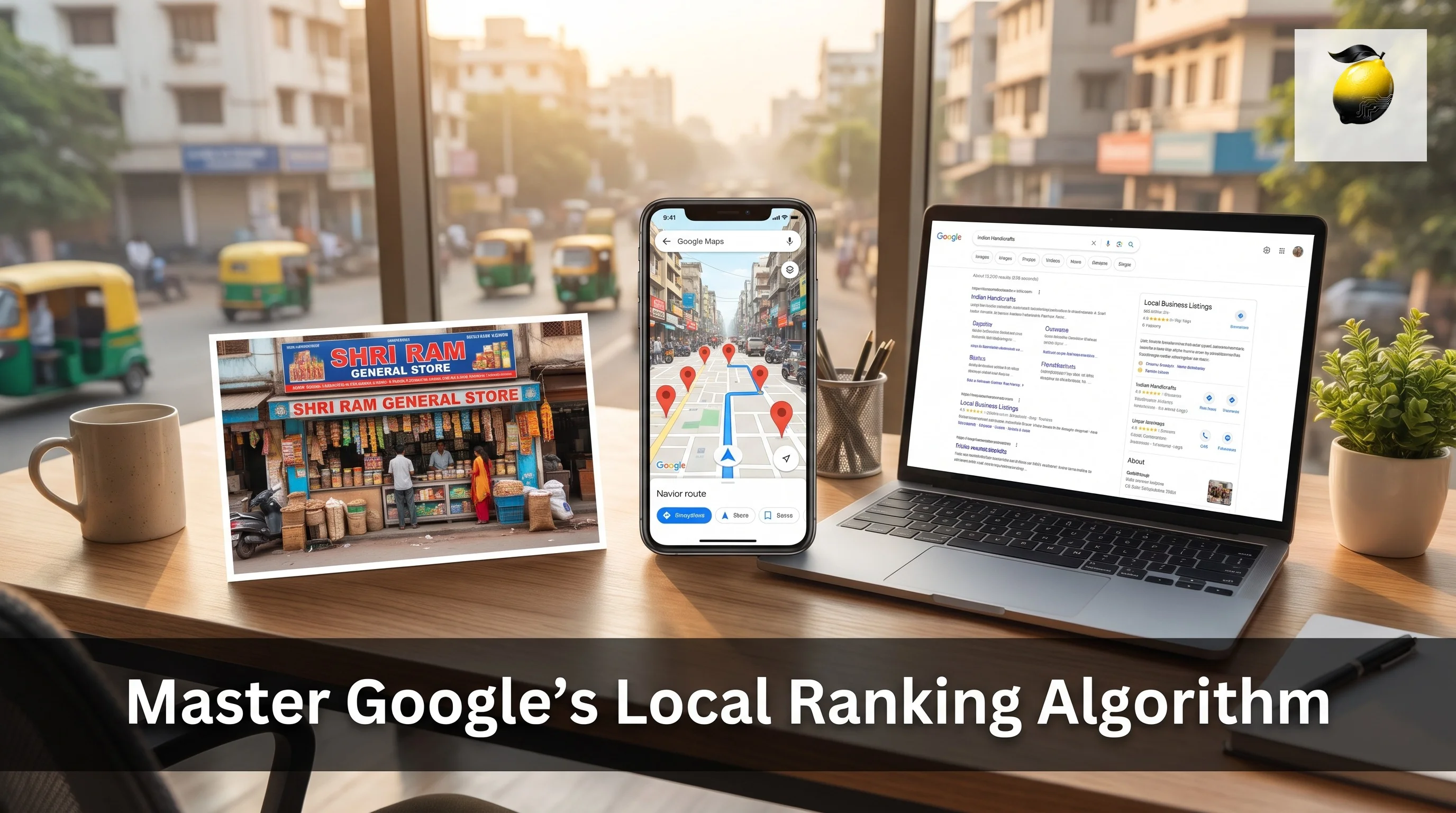
How Google Decides Local Rankings: Relevance, Distance and Prominence Explained
When you search for a service near you, have you ever wondered why certain businesses appear at the top of Google's local search results while others remain buried on page two or three? The answer lies in Google's sophisticated algorithm that evaluates local businesses based on three fundamental pillars: relevance, distance, and prominence. Understanding these factors is crucial for any business looking to improve their visibility in local search results. For businesses across India, mastering google local ranking has become essential to compete effectively in their local markets and attract customers who are actively searching for their products or services.
The local search landscape has evolved dramatically over the past few years, with Google continuously refining how it presents local business information to users. Whether someone is searching for a water purifier service center in Mumbai or a home appliance repair shop near their location, Google's algorithm works tirelessly to deliver the most relevant and useful results. This process is not random but rather a calculated evaluation based on specific signals that businesses can influence through strategic optimization efforts.
For Indian businesses, particularly those in the home services and appliance industry, understanding these ranking factors can mean the difference between thriving with a steady stream of local customers and struggling to generate leads. The competition in local markets has intensified, with businesses investing in digital presence more than ever before. From small repair shops in tier-two cities to established service chains in metropolitan areas, everyone is vying for that coveted top spot in local search results.
This comprehensive guide will break down each of Google's local ranking factors in detail, explaining how they work individually and collectively to determine which businesses appear when potential customers search. By the end, you will have actionable insights to improve your business's local search performance and understand why professional local seo services can accelerate your growth in competitive markets.
Understanding Relevance in Local Search Rankings
Relevance is the cornerstone of how Google determines whether your business deserves to appear for a particular search query. It measures how well your business listing matches what a user is searching for at any given moment. When someone in Bangalore searches for "RO water purifier repair," Google analyzes your business information to determine if you actually provide that specific service. This is where accurate and comprehensive business information becomes absolutely critical.
Your google business profile optimization plays a pivotal role in establishing relevance. Every detail you add to your profile serves as a signal to Google about what your business offers. This includes your primary business category, additional categories, business description, services list, and even the attributes you select. For instance, if you operate a home appliance service center, selecting "Appliance Repair Service" as your primary category immediately tells Google the nature of your business.
The quality and specificity of your business description significantly impact relevance scoring. Rather than generic descriptions, businesses should craft detailed narratives that naturally incorporate the services they offer and the areas they serve. A well-optimized description for a Delhi-based AC repair service might mention specific brands serviced, types of repairs handled, emergency availability, and service areas covered. This level of detail helps Google match your business to highly specific search queries.
Regular posts and updates on your Google Business Profile also contribute to relevance. When you publish posts about seasonal services, new offerings, or special promotions, you provide fresh content that Google can index and match to relevant searches. For example, posting about "monsoon washing machine maintenance packages" during rainy season helps your business appear for related searches. Additionally, ensuring your website content aligns with your Google Business Profile information creates consistency that strengthens relevance signals across platforms.
The Critical Role of Distance in Local Rankings
Distance is perhaps the most straightforward of Google's three ranking factors, yet it carries significant weight in determining which businesses appear in local search results. Simply put, distance measures how far each potential search result is from the location term used in a search or from the user's current location if no specific area is mentioned. When someone searches for "water purifier service near me" while in Pune's Koregaon Park area, Google prioritizes businesses physically closest to that location.
However, distance is not always about being closest to the searcher. Google's algorithm is sophisticated enough to understand context and intent. If a user searches for a specific well-known service center by name, Google may show that business even if it is not the absolute closest option. Similarly, for specialized services with fewer providers, Google may expand the search radius to include relevant businesses further away rather than showing only nearby but irrelevant results.
The accuracy of your business address directly impacts how distance affects your rankings. Businesses must ensure their Google Business Profile lists the exact physical location where they operate or provide services. For service-area businesses that do not have a public storefront, properly configuring service areas instead of a physical address becomes crucial. A home appliance repair service operating across multiple Mumbai suburbs should accurately define all these service areas in their profile settings.
Google also considers proximity when evaluating mobile searches, which now constitute the majority of local searches in India. When users enable location services on their smartphones, Google uses precise GPS coordinates to determine distance. This means a customer standing outside a shopping complex searching for "refrigerator repair" will see different results than someone searching from their home five kilometers away. Understanding this dynamic nature of distance-based rankings helps businesses appreciate the importance of maintaining accurate location information across all online platforms.
Prominence: Building Authority and Visibility
Prominence refers to how well-known and established your business is, both online and offline. Google evaluates prominence through various signals including online reviews, ratings, backlinks to your website, mentions across the web, and overall digital footprint. Essentially, prominence measures your business's authority and trustworthiness in your industry and local area. This factor often becomes the differentiator when multiple businesses have similar relevance and distance scores.
Online reviews and ratings are among the most powerful prominence signals. Businesses with higher average ratings and more review volume typically rank better in local search results. A water purifier service provider in Chennai with 150 reviews averaging 4.5 stars will generally outrank a competitor with only 20 reviews at 4.8 stars. The quantity, quality, recency, and diversity of reviews all contribute to prominence scoring. This is why encouraging satisfied customers to leave honest reviews has become a fundamental aspect of effective local SEO strategies.
Your business's presence across the web significantly influences prominence. This includes citations in local directories, mentions in news articles, blog posts, social media presence, and backlinks from reputable websites. For Indian businesses, getting listed in popular local directories like JustDial, Sulekha, and industry-specific platforms builds citation strength. Quality matters more than quantity here – a mention in a respected industry publication carries more weight than dozens of low-quality directory listings.
Offline prominence also factors into Google's evaluation, though this is harder to measure directly. Well-established businesses with physical storefronts, recognizable branding, and strong community presence often receive indirect prominence signals through increased branded searches, more direct traffic to their websites, and higher engagement on their Google Business Profiles. A home appliance store that has operated in the same Kolkata neighborhood for twenty years naturally accumulates prominence through customer familiarity and word-of-mouth recommendations that translate into online signals.
How These Three Factors Work Together
Understanding how relevance, distance, and prominence interact provides crucial insights into local ranking dynamics. Google does not evaluate these factors in isolation but rather weighs them collectively to determine the best results for each search query. The relative importance of each factor varies depending on the specific search and context, creating a complex but logical ranking system.
Consider this scenario: A user in Hyderabad searches for "urgent washing machine repair." Google identifies three businesses: Business A is closest (2 km away) with moderate relevance and low prominence, Business B is slightly farther (4 km) with high relevance and medium prominence, and Business C is farthest (6 km) with high relevance and high prominence. In this case, Google might rank Business B first because it balances strong relevance for the urgent repair query with reasonable proximity and decent prominence. Business C might rank second despite the distance due to superior prominence, while Business A could rank third despite being closest.
The weighting of these factors also shifts based on search specificity. For broad searches like "home appliance service," prominence and relevance carry more weight since users have not specified location urgency. However, for searches including "near me" or specific neighborhood names, distance becomes significantly more influential. Understanding these nuances helps businesses optimize strategically rather than focusing disproportionately on just one ranking factor.
Seasonal variations and market dynamics also affect how these factors balance. During peak seasons for certain services, such as air conditioner repairs during Indian summers, the volume of searches increases dramatically. Businesses with strong relevance signals for AC services may see improved rankings even if their overall prominence is moderate, simply because Google prioritizes matching the increased demand with available service providers. This demonstrates the fluid nature of local search rankings.
Businesses cannot ignore any of the three factors without consequence. A company might have excellent prominence through years of operation and hundreds of reviews, but if their Google Business Profile categories and services list do not accurately reflect what they offer, relevance suffers and rankings decline. Similarly, being perfectly relevant for certain searches means little if your business is consistently located far from searchers or lacks the prominence signals that build trust and authority.
Optimizing Your Business for All Three Ranking Factors
Successfully improving your local search visibility requires a comprehensive approach that addresses relevance, distance, and prominence simultaneously. Start by conducting a thorough audit of your current Google Business Profile to identify gaps and opportunities. Ensure every section is complete and accurate, from basic information like business name, address, and phone number to detailed elements like service offerings, business hours, and attributes.
For relevance optimization, research the specific keywords and phrases your target customers use when searching for your services. A home service business in Ahmedabad should identify whether customers search for "AC repair," "air conditioner service," "AC mechanic," or other variations, then incorporate these naturally into their business description, services list, and regular posts. Creating a comprehensive list of services with detailed descriptions helps Google understand exactly what you offer and match you to relevant searches.
Distance optimization has limitations since you cannot change your physical location, but service-area businesses can strategically define their coverage zones. If you serve multiple areas, clearly specify each locality or pin code in your service area settings. For businesses with multiple locations, creating separate Google Business Profiles for each location with unique content and information maximizes local visibility across different areas. Consistency in location information across your website, social media, and directory listings reinforces accurate distance calculations.
Building prominence requires sustained effort across multiple channels. Develop a systematic approach to requesting reviews from satisfied customers through follow-up emails, text messages, or in-person requests. Respond professionally to all reviews, both positive and negative, demonstrating active engagement with customer feedback. Invest in local link building by partnering with local organizations, sponsoring community events, and creating valuable content that other local websites want to reference and link to.
Practical Strategies for Indian Businesses
Indian businesses face unique opportunities and challenges in local search optimization. The diverse linguistic landscape means optimizing for regional language searches alongside English queries. A Mumbai-based appliance service should consider how customers might search in Hindi, Marathi, or English, adapting their Google Business Profile to accommodate multiple languages where appropriate. Google supports business information in multiple languages, allowing businesses to reach broader audiences.
Pricing transparency matters significantly in the Indian market where customers actively compare service costs. While you cannot list exact prices for every service on your Google Business Profile, regularly posting about service packages with price ranges builds trust and relevance. For example, publishing a post about "AC servicing packages starting from INR 499" provides useful information while incorporating relevant keywords naturally.
Local partnerships amplify prominence signals effectively. Collaborating with complementary businesses for cross-promotion, participating in local business associations, and engaging with community initiatives create authentic prominence signals. A water purifier service partnering with a plumbing service for mutual referrals benefits both businesses through expanded reach and credibility.
Mobile optimization cannot be overlooked given India's mobile-first internet usage patterns. Ensure your website loads quickly on mobile devices, includes click-to-call buttons, and provides easy access to location information. Google considers user experience signals when evaluating prominence, so a website that provides excellent mobile experience contributes positively to overall rankings.
Monitoring and analyzing your performance through Google Business Profile insights reveals which strategies work best for your specific business. Track how customers find your listing, what actions they take, where they come from geographically, and what search queries trigger your appearance. This data guides continuous optimization efforts and helps identify new opportunities for improvement.
Common Mistakes That Hurt Local Rankings
Many businesses unknowingly sabotage their local search performance through avoidable mistakes. Inconsistent business information across platforms confuses Google and dilutes prominence signals. If your website lists one phone number, your Google Business Profile shows another, and directory listings contain a third variation, Google struggles to verify which information is correct. Maintaining strict consistency across all online platforms is essential.
Keyword stuffing in business names remains a tempting but damaging practice. Adding keywords like "Best AC Repair Service in Bangalore" to your official business name might seem helpful for relevance, but Google explicitly prohibits this practice and may suspend profiles that violate naming guidelines. Your business name should be exactly as it appears in the real world on your storefront, documentation, and branding.
Neglecting the post-creation feature represents a missed opportunity for ongoing relevance signals. Regular posts about services, offers, updates, and events keep your profile active and provide fresh content for Google to index. Businesses that post weekly or bi-weekly typically see better engagement and rankings than those with static profiles unchanged for months.
Ignoring negative reviews or responding defensively damages both prominence and customer perception. Professional, empathetic responses to criticism demonstrate commitment to customer satisfaction and can actually strengthen prominence signals. Many potential customers read review responses carefully when evaluating businesses, making your response strategy a critical component of local SEO success.
Conclusion
Google's local ranking algorithm built on relevance, distance, and prominence creates a fair and effective system for connecting searchers with the most appropriate local businesses. By understanding how each factor works independently and collectively, businesses can develop comprehensive optimization strategies that improve visibility in local search results. For Indian businesses in competitive markets, mastering these elements through professional services or dedicated in-house efforts can dramatically increase customer acquisition and revenue growth.
Success in local search is not about gaming the system but rather about genuinely providing excellent service, maintaining accurate information, building strong community connections, and actively managing your online presence. Businesses that consistently optimize their profiles while delivering quality services naturally accumulate the signals Google values most. The three pillars of local ranking are ultimately about helping customers find trustworthy, relevant businesses near them – a goal that aligns perfectly with building a successful, customer-focused business in any Indian city or town.
When you search for a service near you, Google's algorithm evaluates three critical factors to determine which businesses appear first: relevance (how well your business matches the search query), distance (your proximity to the searcher), and prominence (your overall reputation and authority online). These interconnected elements work together to create the local pack rankings you see on search results. Learn more about how optimizing your Google Business Profile, maintaining consistent NAP citations, and building genuine customer reviews can significantly improve your visibility in local searches and help potential customers discover your business more easily.